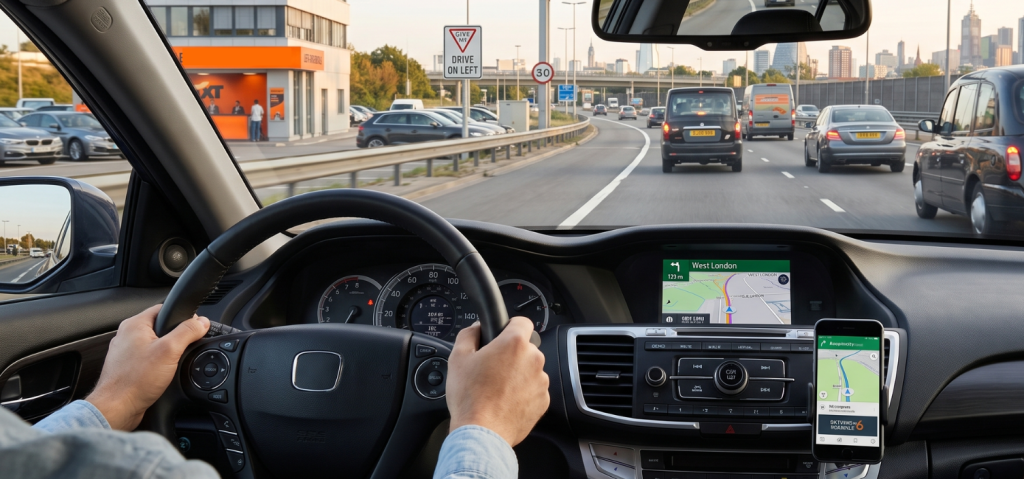
20 Tips for a Relaxing and Affordable Road Trip by Car
A road trip is more than just a type of vacation—it’s a way of life. The engine is running, the playlist is playing, and ahead of you lies a road that leads somewhere. Sounds perfect. It also sounds like the most common mistake road trippers make: just hitting the road without preparing.
If you set out unprepared, you’ll struggle along the way with traffic jams, breakdowns, unexpected costs at the counter, and the uneasy feeling of not knowing whether your insurance will actually cover you. But a stress-free road trip isn’t a matter of luck—it’s a matter of proper preparation.
In this guide, you’ll find 20 practical tips—from choosing a vehicle to packing lists and route planning, all the way to the best apps and cost traps you absolutely need to be aware of. Whether you’re renting a car or driving your own, whether it’s a 3-day trip or a 3-week adventure: these tips will make your road trip better.
Preparation – The Foundation of a Great Road Trip
Tip 1: Your Own Car or a Rental Car? Making the Right Decision
Before you even start planning a route, you need to make this basic decision: Will you drive your own car or rent one?
Your own car is a good option if the route is short, the vehicle is in good condition, and you have no mileage restrictions. The advantage: no handover, no paperwork, no deposit.
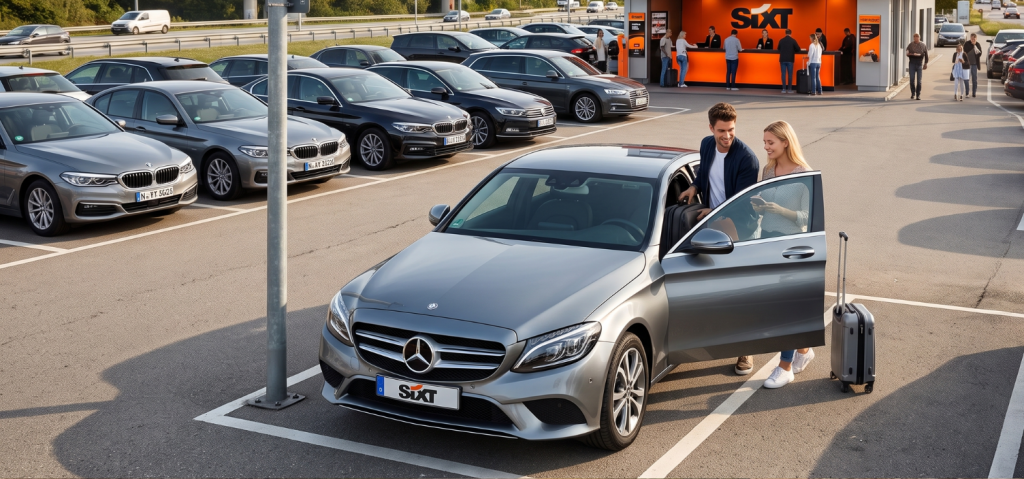
Renting a car is worth it when traveling by plane (pickup at the destination airport), for long distances that would be too taxing on your own car, or if you need a specific vehicle for the terrain—such as an SUV for Iceland, a convertible for the Côte d’Azur, or a van for a group trip.
What to look for when choosing a rental car:
- Unlimited mileage: A must for any road trip. Rates with mileage limits end up being expensive.
- Comprehensive insurance with no deductible: The decisive factor in the event of damage.
Trunk size and - number of seats: Plan generously—on long trips, cramped storage space becomes a real problem.
- Book early: Otherwise, you’ll be limited to whatever’s left in the fleet, especially during peak season.
With a SIXT coupon from Sixty6Coupons , you’ll save money right away when booking—without compromising on vehicle quality or insurance coverage. You can find all details on choosing a rental car in our rental car guide.
Tip 2: Check Your Vehicle Before You Leave
| Checkitem | What to check |
|---|---|
| Tire pressure | Adjust based on vehicle load (sticker in door frame) |
| Tire tread depth | At least 1.6 mm – preferably 3 mm+ for international trips |
| Engine oil | Check minimum level, top up if necessary |
| Coolant / Antifreeze | Fluid level and antifreeze concentration |
| Windshield washer system | Fluid level and condition of wiper blades |
| Vehicle lighting | All lights working properly (turn signals, brake lights, fog lights) |
| Brake fluid | Fluid level and color (dark color = replacement overdue) |
| Spare tire / Roadside kit | Present and fully functional |
Tip 3: Plan Your Route Wisely and Leave Some Wiggle Room
The most common planning mistake: trying to do too much at once. If you pack every day with driving and sightseeing, you’ll end up spending more time in the car than at scenic overlooks.
Rule of thumb: Plan for a maximum of 200–250 km of driving per day. This gives you enough time for breaks, detours, and spontaneous stops. Use tools like Google Maps or the Roadtrippers app for route planning (it shows not only the route but also gas stations, attractions, and rest areas along the way). Plan your route as a loop or with a start and end point at airports—this makes arriving and departing with a rental car much easier.
Especially important: Identify in advance the 3–4 absolute highlights you definitely don’t want to miss. Leave the rest open. Road trips thrive on spontaneity.
Tip 4: Timing is everything: Driving against the flow saves hours
If you set out for the summer season on Friday at 2 p.m., you’re guaranteed to hit traffic. If you want to avoid that, think like a pro:
- Set out early: Leave between 5 and 7 a.m.—the highways are empty, and the kids are (usually) still asleep.
- Drive late in the evening: After 8 p.m., rush-hour traffic eases off significantly.
- Thursday instead of Friday: If you drive a day earlier, you’ll avoid the typical vacation travel traffic.
- Use traffic apps: Google Maps, Waze, and the ADAC traffic alert service provide real-time updates.
Traveling off-peak also means: don’t go to a restaurant at the top of the hour, but rather at 11:30 a.m. or 1:30 p.m. No waiting & better service.
Tip 5: Get the Right Insurance Coverage
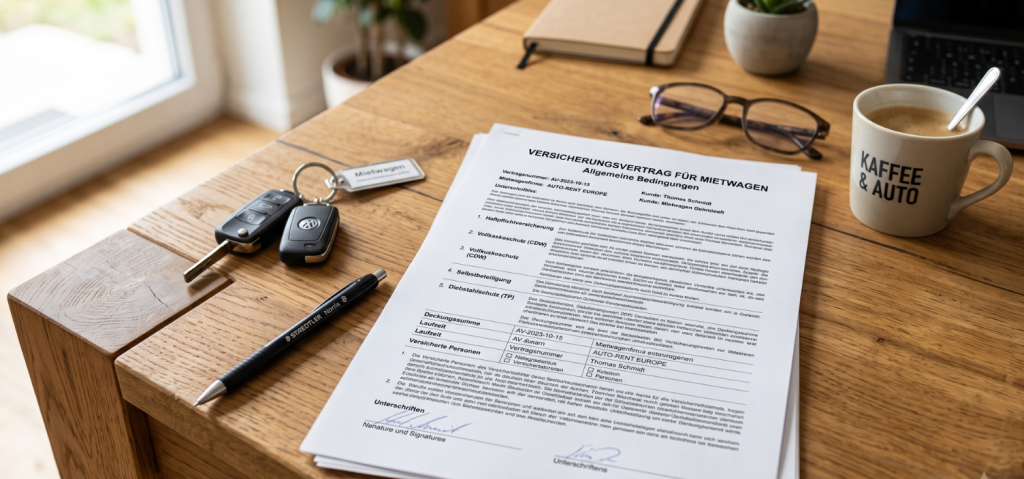
- Liability insurance is included in the rental price, but the coverage limit is often alarmingly low outside of Europe. Check the terms and conditions before you sign.
- Comprehensive coverage (CDW) protects against damage to your own vehicle. Without this coverage, you may be liable for the full current market value of the vehicle in the event of damage.
- Deductible insurance: If you book comprehensive coverage with a deductible, you can insure the deductible through an affordable third-party provider—this is often significantly cheaper than the rental company’s direct coverage.
- Mallorca Policy / Traveler Policy: For road trips to other EU countries or worldwide, this policy raises the coverage limit to German standards.
Tip 6: Know the international driver's license rules
Within the EU, a regular driver’s license is sufficient. For road trips outside of Europe—such as to the U.S., Japan, Turkey, or Morocco—an international driver’s license is required in many countries. It is available from the Department of Motor Vehicles or the ADAC, costs just a few euros, and can be applied for in a matter of hours.
If you don’t have one when picking up the car abroad, many rental companies will refuse to hand over the car, even if the reservation has already been paid for.
Packing: Smart, Not Heavy
Tip 7: The Road Trip Packing List—The Essentials at a Glance
The biggest mistake when packing: taking too much. On a road trip where you change hotels every day, you don’t want to have to empty half the trunk in the evening just because your toothbrush is buried at the very bottom.
A systematic approach to packing:
- Put heavy suitcases and backpacks in first (at the bottom, close to the back seat—to optimize the vehicle’s center of gravity)
- Items needed daily on top (toiletry bag, sleeping gear,
- a change of clothes for tomorrow)
Keep the following within easy reach in the car: safety vest, first-aid kit, snacks, jackets, charging cables
Essential gear for a road trip:
| Category | Contents |
|---|---|
| Documents | Driver’s license, ID card/passport, vehicle registration, proof of insurance, booking confirmation |
| Safety | High-visibility vests (for all passengers!), warning triangle, first aid kit, flashlight, jumper cables |
| Navigation | Downloaded offline maps (Google Maps / MAPS.ME), road atlas as backup |
| Technology | USB/USB-C charging cables, car charger adapter, AUX cable or Bluetooth adapter, power bank |
| Comfort | Neck pillow, blanket, rear sunshades, trash bag |
| Country-Specific Gear | Depending on destination: Fire extinguisher (GR), spare light bulbs (F), highway toll sticker/vignette (A, CH, HU…) |
Tip 8: Plan Your Meals Wisely
If you rely exclusively on highway rest stops for your meals, you’ll pay about twice as much as necessary and often eat less healthily.
The smart alternative: a cooler. Stock up at your local supermarket before you leave: water, fruit, sandwiches, nuts, yogurt, and cut-up vegetables. This keeps your blood sugar stable, prevents fatigue from heavy meals, and saves you a lot of money.
Snack tips specifically for the car:
- Grapes, tangerines, apple slices: no fuss, no mess
- Nuts and trail mix: keep you full for a long time, won’t melt
- Whole-grain bread with cold cuts: better than fast food, significantly cheaper
- Drinking yogurt instead of yogurt cups
For culinary highlights on the road: Ask the locals. They know where the best food is, and it’s rarely at a highway interchange.
Tip 9: Clothing and Ergonomics
It sounds trivial, but after six hours, it makes all the difference: comfortable clothing. Tight jeans, a belt that digs in, shoes that pinch—all of these things create stress that affects the mood in the car.
Ergonomics tips for long drives:
- Adjust the seat to fit your entire body, lean back, and keep your arms slightly bent while steering
- Use lumbar support or a rolled-up towel in the lower back
- Feet can swell during long periods of sitting; choose shoes that are a bit roomier
- Vary your seating position slightly to avoid uneven strain
On the Road: Safe, Relaxed, Stress-Free
Tip 10: Take a break every two hours
You should take a break at least every two hours, even if you still feel fine. Micro-sleep doesn’t just happen when your eyes start to burn. Your concentration gradually wanes, long before your body sends a clear warning signal.
Take a proper break:
- Plan for at least 15–20 minutes
- Thoroughly ventilate the car (open all doors)
- Do some quick stretching exercises or walk a few steps
- Drink water—dehydration is one of the main causes of fatigue while driving
- Coffee takes 20–30 minutes to take effect, so drink it in advance, not at the last minute
Helpful tip:
Make a point of planning breaks at interesting places: a small historic town, a scenic overlook, a mountain lake. That way, the break isn't a waste of time, but a highlight of the trip.
Tip 11: Navigation and Apps—The Best Tools for When You're on the Go
Google Maps is the standard, offering real-time traffic alerts and the ability to download offline maps for specific regions. A must-have for international road trips: download the offline map before departure to avoid expensive roaming charges while abroad.
MAPS.ME is the better offline alternative in areas with poor reception. In Iceland, on mountain passes, or in rural regions of Southern Europe, it’s often the only reliable option.
Waze often provides more up-to-date traffic information than Google Maps, as the community reports incidents in real time.
You can also find more road trip apps in our car rental guide.
Tip 12: Music, Podcasts, and Audiobooks
A bad mood is the most common cause of lack of concentration while driving—and the best way to prevent it is with good entertainment.
- Create a playlist in advance: Download music or playlists from your streaming service for offline listening. Otherwise, your connection will drop in tunnels, on mountain passes, and in rural areas.
- Podcasts and audiobooks are your secret weapons on long drives. They gently hold your attention without distracting you, and make the miles fly by. A mystery or a series about your destination also builds anticipation.
- For the backseat: Tablets with movies or offline content keep passengers relaxed.
- For kids: Classic car games like guessing license plates or “I Spy” are still effective today for keeping kids from whining.
Tipp 13: Tanken und Kraftstoffkosten im Griff behalten
Klingt selbstverständlich, ist aber eine der häufigsten Kostenfallen auf Roadtrips: falsche Tankstrategie.
- Tanke möglichst nicht an der Autobahn, die Preise dort liegen oft 10–20 % über dem Durchschnitt.
- Supermärkte und freie Tankstellen außerhalb von Autobahnen sind fast immer günstiger.
- In ländlichen Regionen (USA, Australien, Ostafrika) kann es lange keine Tankstelle geben – nie unter ein Viertel Tank fallen lassen.
- Mit der App GasBuddy findest du die günstigste Tankstelle in der Umgebung.
- Beim Mietwagen: Rückgabe mit vollem Tank, andernfalls berechnen Vermieter den Kraftstoff zu stark überhöhten Preisen plus Servicegebühr.
Tip 14: Parking in Cities—Be Smart, Not Expensive
Anyone who visits major cities on a road trip knows the problem: Parking in the city center is expensive, time-consuming, and annoying.
The solution: Park and Ride. Park your car at a P+R lot outside the city center—where parking is often free or significantly cheaper—and continue your journey by public transportation. Most P+R lots are located right next to subway or bus stops.
Alternative: Pre-book parking garages via ParkMe—in many cities, this offers a significant discount compared to walking in without a reservation.
Tip 15: Avoid the Tourist Crowds
The best thing about a road trip: You’re not tied to tour buses or rigid schedules. Take advantage of that.
- Take scenic and coastal roads instead of highways—you’ll see more and feel more relaxed.
- Visit famous landmarks early in the morning (before 9 a.m.) or in the evening (after 6 p.m.)—that’s when the parking lots are empty and your photos will be tourist-free.
- Explore side roads: The best restaurant, the most beautiful viewpoint, and the most unique souvenir are rarely found on the main route.
Tip 16: Where to Stay While Traveling
| Option | Pros | Cons |
|---|---|---|
| Hotel / Guesthouse | Comfortable, reliable | Expensive, less flexible |
| Airbnb / Vacation Rental | Often cheaper, more space | Must be booked in advance |
| Camping / Tent | Inexpensive, close to nature | Less comfort, weather-dependent |
| Campervan / Camper | Maximum freedom | High rental costs |
| Sleeping in the car | Free of charge | Rarely comfortable |
Helpful tip:
Always book at least the first night in advance—after a long day of traveling, you don't want to spend hours looking for a place to stay. For all other stops, you can be flexible, especially outside of peak season.
Tip 17: Roadside Assistance and Emergencies
Breakdowns can happen even to perfectly maintained vehicles. If you’re prepared, you can stay calm.
Car emergency kit:
- Jump start cables (or a jump start power bank)
- High-visibility vest (for every passenger—mandatory in many EU countries!)
- Warning triangle
- Flashlight
- Small tool and repair kit
Save these important numbers:
- Rental car company’s roadside assistance (listed in the rental agreement)
- ADAC International Assistance: +49 89 22 22 22
- European emergency number: 112
ADAC members are covered in many countries worldwide; this is especially worthwhile for longer road trips.
Tip 18: Crossing Borders in a Rental Car – Be Sure to Check in Advance
Anyone who wants to cross national borders in a rental car must notify the rental company in advance and have this specified in writing in the rental agreement. Otherwise, insurance coverage may lapse—even within the EU.
For road trips to Eastern European countries, Turkey, or destinations outside Europe, additional restrictions or surcharges often apply. You can find details in our guide Renting a Car Abroad.
Tip 19: Know the traffic rules in your destination country
Ignorance is no defense against fines when traveling abroad. Be sure to find out in advance about:
- Speed limits (e.g., 80 km/h instead of 100 on rural roads in France)
- Blood alcohol limit (0.0‰ in many Eastern European countries)
- Driving on the left (United Kingdom, Ireland, Malta, Cyprus, Australia, Japan…)
- Toll and vignette requirements (Austria, Switzerland, Hungary, the Czech Republic, Slovakia…)
- Mandatory equipment (fire extinguishers in Greece, spare bulbs in France)
The ADAC offers a free country information database with all relevant traffic rules for Europe and major international travel destinations.
Tip 20: Mental Attitude—The Most Important Road Trip Tip of All
The most laid-back tip to wrap things up: A road trip isn’t a race.
Traffic jams, detours, taking the wrong exit, a flat tire—it’s all part of the experience. If you’re traveling with a rigid schedule and get frustrated by every obstacle, you’ll ruin your own vacation.
The best mindset: The journey is the destination. That side road you hadn’t actually planned to take sometimes leads to the most beautiful viewpoint of the entire trip. The restaurant without a Google review that you discover on a whim is often the best meal of the vacation.
Treat yourself to breaks that you enjoy. Take detours that are worth it. And always plan a little less than you actually could.
An Overview of the Most Common Road Trip Mistakes
| Mistake | Solution |
|---|---|
| Planning too much distance per day | Max. 200–250 km daily as a rule of thumb |
| Booking rental car without fully comprehensive insurance | Full coverage with zero excess or third-party insurance policy |
| Buying snacks only at rest stops | Fill a cooler box at a supermarket before departure |
| Ignoring regular breaks | Get out of the car every 2 hours for 15–20 minutes |
| Not registering cross-border travel | Get written confirmation from the rental company in advance |
| Not documenting existing damage | Take photos during pick-up and return |
| Driving on an empty tank | Never drop below a quarter tank, especially abroad |
| Booking spontaneously at the airport | Always reserve your rental car online in advance |
| Forgetting music/playlists | Save playlists offline before departure |
| Forgetting proper license documents | Apply for an International Driving Permit for non-EU destinations |
Start Your Road Trip on a Budget with SIXT
For your next road trip—whether through Germany, Europe, or around the world—SIXT offers one of the most reliable and extensive car rental networks globally. Transparent booking terms, modern vehicles, and a wide network of locations make SIXT the top choice for road trippers.
Even better: With the latest SIXT coupon codes from Sixty6Coupons, you can book your rental car at the lowest price—whether it’s for a short trip or a multi-week road trip.
👉 Get your SIXT coupon now and hit the road on a budget
The Most Important Questions & Answers About Road Trips by Car
First, decide on the region and your destination, pick out 3–4 must-see spots, and plan a rough route with a maximum of 200 km of driving per day. Leave the rest open on purpose—road trips thrive on spontaneity.