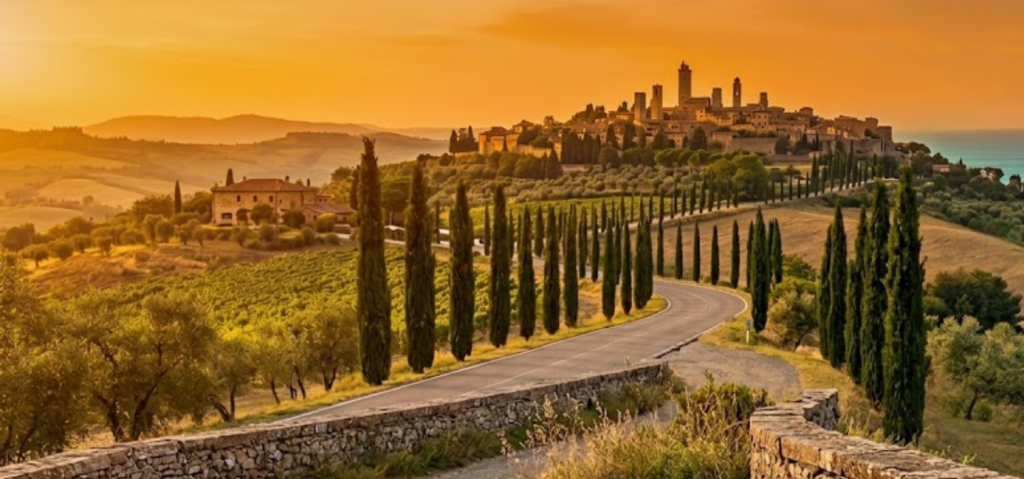
Avenues of cypress trees, medieval hilltop towns, and vineyards as far as the eye can see: Tuscany is best explored at your own pace. With a rental car, the route takes you from Florence through the Chianti region to the Val d’Orcia, with no set itinerary.
Hardly any other region in Italy is as well-suited for a road trip as Tuscany. The distances between the highlights are short, the landscape shifts from art cities to vineyards and coastal stretches, and via small country roads you can also reach places that are barely accessible by bus or train. We’ll show you a tried-and-true route, what to look for when renting a car, and when the trip is most worthwhile.
The Best Time to Take Your Tuscany Road Trip
The most pleasant time to drive through Tuscany is in the spring (April through June) or in early fall (September, October). During these months, temperatures are mild, the roads are less crowded, and the landscape is particularly colorful, whether it’s the blooming poppy fields in May or the golden grape harvest in the fall. Although midsummer offers reliable weather, it also brings high temperatures, crowded cities like Siena or San Gimignano, and noticeably higher car rental prices.
The Perfect Route Through Tuscany
A classic Tuscany route can be easily covered in 7 to 10 days and connects art cities, wine regions, and quiet country roads. Be sure to allow enough time for each leg of the trip, as the region’s attractions are often off the main route.
Stage 1: Florence and the Chianti Region
Florence is the starting and ending point for many round-trip itineraries, and it’s also where you can pick up your rental car. From here, the route heads south through the Chianti region, known for its vineyards, cypress-lined avenues, and small wineries that are perfect for a tasting along the way. The Chiantigiana (SR222) connects Florence with Siena and is considered one of the most scenic roads in the region.
Stage 2: Siena, San Gimignano, and Volterra
Stage 3: Val d'Orcia and Crete Senesi
Stage 4: The Coast and the Return Trip
If you have time, extend your route toward the Maremma or to the cypress-lined avenue in Bolgheri before heading back to Florence or Pisa. This leg of the trip is especially suitable for anyone who wants to wrap up their road trip with a few days by the sea.
Rental Cars in Tuscany: What You Should Keep in Mind
For a relaxing road trip in Tuscany, choosing the right vehicle is almost more important than the route itself. The historic old towns are designed for small cars, not large SUVs or vans.
- Vehicle size: A small or compact car navigates narrow alleys and narrow country roads much more easily than a large vehicle.
- ZTL Zones: Many historic city centers, including those in Florence and Siena, have a Zona a Traffico Limitato (ZTL). Entering without a permit is captured by cameras and automatically results in a fine, which is often not issued until months later.
- Parking: If possible, park your car outside the historic centers in designated parking lots and explore the centers on foot.
- Tolls: On Italy’s highways (Autostrada), a toll is charged based on the distance traveled. Have cash or a card ready for the toll booths.
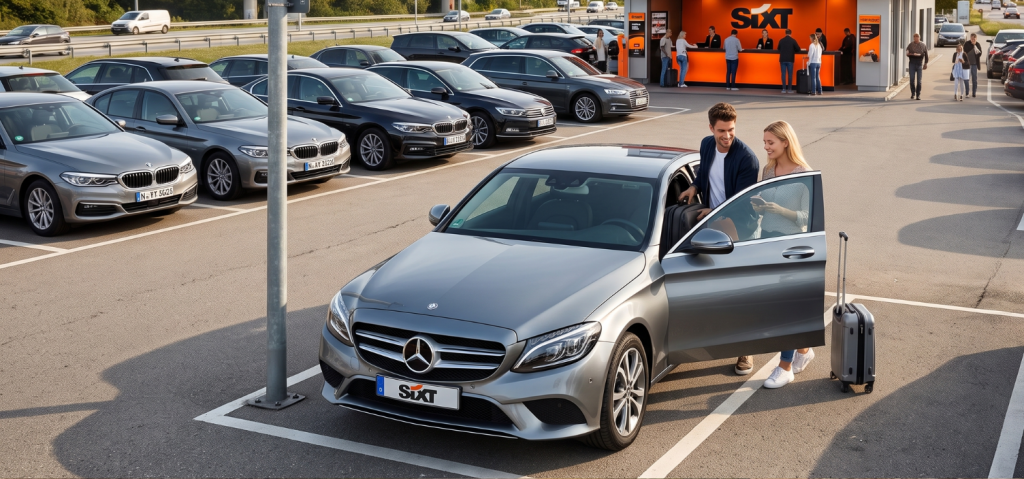
- Booking: Compare offers from different car rental companies and pay attention to the pickup location; many road trips start right at the Florence or Pisa airport.
Practical Tips for When You're on the Go
- Be sure to allow plenty of time for photo stops in the Val d’Orcia and the Crete Senesi—the roads constantly invite you to pull over.
- Book accommodations in smaller towns or agriturismos well in advance; they fill up quickly, especially during peak season.
- Set aside at least half a day for each of Siena, San Gimignano, and Volterra—you can’t really experience these cities just by driving through them.
- Fill up your tank in advance; on the country roads between the villages, gas stations are sometimes far apart.
Conclusion: Explore Tuscany at your own pace with a rental car
A road trip through Tuscany connects art cities, vineyards, and tranquil countryside, all within short distances of one another. For a relaxing trip, keep the following in mind:
Choose to travel in the spring or early fall for pleasant temperatures and less traffic. Opt for a small to compact vehicle for navigating the narrow streets of historic city centers and country roads. Check in advance for ZTL zones in the cities along your route. Allow enough time for photo stops and smaller towns off the main routes.
With the right preparation, a road trip through Tuscany will be one of the most beautiful rental car trips in Italy.
Frequently Asked Questions About the Tuscany Road Trip
ZTL stands for Zona a Traffico Limitato, which refers to a traffic-calmed zone in historic city centers. If you drive into one without a permit, it will be recorded by a camera and you will be fined afterward.
Florence and Pisa are the most common starting points, as both cities are well-connected and have numerous car rental agencies.
Yes, a distance-based toll is charged on the highways (Autostrada). Payment is made at the toll booths using a card or cash.
Spring and early fall offer mild weather, fewer tourists, and lower car rental rates than midsummer, when it can also get very hot.
Many providers offer one-way rentals, such as from Florence to Pisa. This usually incurs an additional fee, which you should factor into your budget when making your reservation.