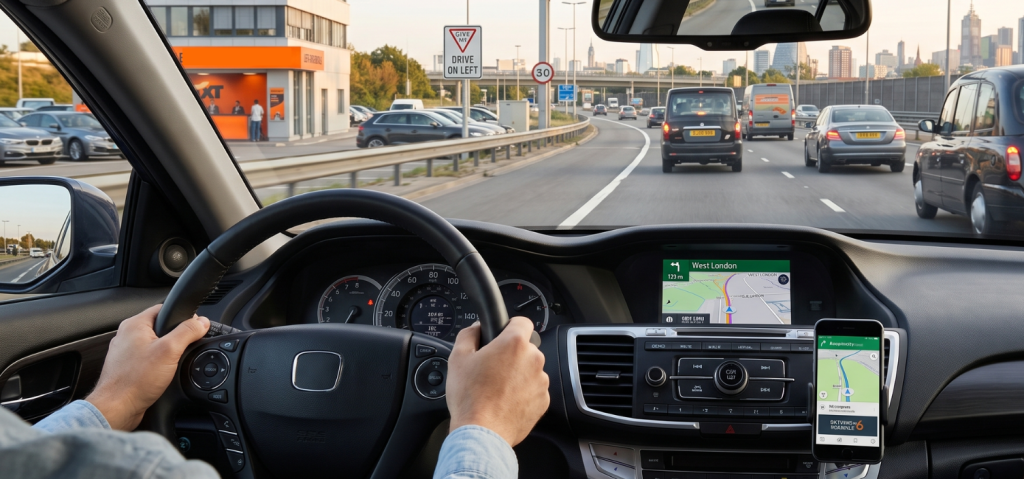
Renting a car abroad means maximum freedom: no rigid schedules, no crowded buses—just drive off whenever and wherever you want. Anyone who rents a car abroad benefits from exactly this flexibility and independence. But if you book without being prepared, you risk hidden costs, insurance pitfalls, and unpleasant surprises at the counter. This guide shows you step by step how to rent a car abroad affordably and safely, from the best booking strategy to a smooth vehicle return.
Save up to 20% on your next rental car Use our latest SIXT coupons and discount codes to start your vacation on a budget: Latest SIXT coupons and discount codes.
Why is it worth renting a car abroad?

Step 1: Book in advance from home
- Lower prices: Early-bird discounts and special rates are particularly common when renting a car abroad. Those who book spontaneously at the airport often pay significantly more.
- More choice: On-site, especially during peak season, the available vehicle categories are often limited.
- Legal certainty: If you book through a German provider or agent, German law applies in the event of a dispute, and you have a point of contact in Germany.
- Better opportunities to compare: At home, you have the time and peace of mind to carefully compare multiple providers. At the airport, under time pressure, you don’t have that luxury.
A practical tip for renting a car abroad:
Don't just compare the base price; make sure to check exactly what services are included, such as comprehensive insurance, unlimited mileage, additional drivers, or child seats. Anything you have to add on-site is usually much more expensive.
Step 2: Bring the correct driver's license
A surprise for many travelers: A German driver’s license isn’t always sufficient abroad.
Within the EU, the EU driver’s license is recognized in all member states.
Outside the EU, an international driver’s license is required or at least strongly recommended in many countries. This applies to popular travel destinations such as:
- USA, Canada, Australia
- Turkey, Thailand, Japan
- Morocco, South Africa, Kenya
The international driver’s license is simply an official translation of your national driver’s license and must always be carried along with the national one. In Germany, it is available from the Road Traffic Authority or the ADAC. We explain in detail how to apply for it, how much it costs, and how long it is valid in our guide to Applying for an International Driver’s License.
Important: If you do not have an international driver’s license, car rental companies may refuse to hand over the vehicle—even if the reservation has already been paid for.
Step 3: Note the minimum age and young driver fees
Step 4: Choosing the Right Insurance for Your Rental Car Abroad
Required: Automobile liability insurance
Every rental car is covered by mandatory liability insurance. But be careful: especially outside Europe, the mandatory minimum coverage limits are often very low—they may barely be enough to cover personal injury claims. Experts recommend coverage of at least 1 million euros, or even more.
For trips within the EU, there is the so-called “Mallorca Policy,” which raises coverage to German standards. Outside the EU, the “Traveler Policy” offers worldwide protection.
Recommendation: Comprehensive auto insurance with no deductible
Step 5: Credit Card and Security Deposit – What You Need to Know
Almost all car rental companies worldwide require a credit card as a security deposit —specifically a real credit card (Visa, Mastercard, Amex), not a debit card or virtual card. Important:
- The card must often be issued in the name of the primary driver.
- There must be a sufficient credit limit available – the deposit can range from a few hundred to over 2,000 euros, depending on the vehicle class.
- Some rental companies insist that the booking was also made with the same card.
If you do not have a traditional credit card, you should clarify this before booking. In Germany, some providers allow a deposit to be paid via debit card – abroad, this is the exception.
Step 6: Avoid no-show fees
One of the most common cost traps: the no-show fee. If you don’t show up at the rental car counter on time—for example, due to a flight delay—many providers will charge you the full rental price without providing a vehicle.
Here’s how to protect yourself:
- Call the rental company immediately if you realize you’ll be late.
- Check the terms and conditions for no-show clauses when booking.
- Look for flexible booking options with free cancellation.
Step 7: Crossing the border in a rental car
Anyone wishing to drive a car rented in Germany abroad or to cross national borders with a vehicle rented abroad must make sure to clarify this with the rental company in advance and have it specified in writing in the rental agreement.
Within the EU, crossing borders is generally possible without any problems—for example, Germany–France, Spain–Portugal, or Sweden–Norway. Stricter conditions often apply to trips to Eastern Europe.
Outside Europe, the rules vary greatly:
- USA–Canada: usually no problem
- USA–Mexico: almost always restricted or prohibited
- Within South America: often not permitted
Important: Even if crossing the border is permitted under the rental terms, you must actively inform the local rental office. Otherwise, you risk losing your insurance coverage. An additional fee may also apply for border crossings, and the security deposit may be increased.
Step 8: How to Properly Pick Up and Return a Vehicle
Many mistakes are made during the vehicle handover process, and these can end up being costly later on.
Checklist for vehicle handover:
- Conduct a joint inspection with the rental company.
- Take photos of all damage, scratches, dents, and damage to the rims—even minor ones.
- Have all pre-existing damage confirmed in writing on the handover report.
- Check the tires, tread, brakes, and legally required equipment.
- Note the odometer reading and fuel level.
- Take a photo of the dashboard showing the fuel gauge.
When returning an item:
- Always return the vehicle with the agreed-upon fuel level—otherwise, you will be charged for fuel plus a service fee at inflated prices.
- Insist on a joint inspection of the vehicle.
- If there is no in-person handover (e.g., for nighttime returns), take extensive photos and videos.
- Afterward, check your credit card statement for any subsequent charges.
Step 9: Familiarize yourself with the traffic rules in your destination country
Different traffic rules apply abroad – and ignorance is no excuse for fines. Before you travel, make sure you know:
- Speed limits (often different from those in Germany)
- Alcohol limits
- Mandatory equipment (safety vest, first-aid kit, warning triangle)
- Toll requirements and vignette requirements
- Special parking rules in cities
The rental company will bill you for any parking tickets you ignore after your return – plus their own processing fee.
An overview of the most common cost pitfalls
| Cost trap | Here’s how to avoid them |
|---|---|
| Insurance is too expensive there | Purchase insurance in advance from a third-party provider |
| No-show fee | Review the terms and conditions; call if there is a delay |
| Fuel costs | Return with a full tank; take a photo of the fuel gauge |
| Subsequent damage costs | Take photos of all existing damage and document it |
| Additional driver fee | List all drivers in the contract in advance |
| Border crossing fee | Specify the cross-border trip when booking and have it confirmed |
| Young Driver Surcharge | Check the Young Driver Fee first |
| Credit card required | Bring a valid credit card with a sufficient credit limit |
Drive affordably abroad with SIXT coupons
Conclusion: How to Rent a Car Abroad Safely and Affordably
Renting a car abroad is a great way to travel flexibly and independently. If you know the most important rules—from having the right driver’s license and adequate insurance coverage to properly returning the vehicle—you can relax and focus on what matters most: the trip itself.
Key points at a glance:
- Book early from Germany
- Check the destination country’s driver’s license requirements
- Secure comprehensive insurance with no deductible
- Have a credit card with a sufficient limit ready
- Notify authorities in advance of border crossings
- Carefully document the vehicle handover
- Save money with coupons from reputable providers
Ready for your next road trip? Get your SIXT discount code now and start your adventure at a lower cost.
Frequently Asked Questions About Renting a Car Abroad
No, virtually all international car rental companies require a security deposit. Debit cards are rarely accepted.
That depends on the rental company and the destination. Within the EU, it is usually permitted, but must be arranged in advance. Restrictions often apply for destinations in Eastern Europe or outside Europe.